In our previous installment, Garth pored over the start of Rubber Chicken Software, what that was like, and howTranslator was conceived and how that started Chicken Systems. See this installment here.
Garth continues on how Translator made a significant impact on software samplers, and how Chicken Systems has evolved to the present day.
Chicken Systems News: Translator was original conceived and written in the late 1990's. Why wasn't it conceived earlier - seems like a obvious idea.
G: it wasn't so obvious back then. Of course good ideas always seem obvious AFTER they are brought to market.
Translator was the first computer product that read the proprietary CD's and disks that the hardware samplers had for the sole purpose of reading and converting into another data structure. Of course, thse operations were done inside the hardware samplers beforehand for their own purposes. The pure innovation of Translator was to take that concept and widen it into a all-in-one utlity everyone could use.
Awave from FMJsoft was doing software conversions but it revolved around soundcards. We took that concept and put it together with professional applications.
Why wasn't it done before? I suppose it could have appeared much earlier, but computers were still getting established and stable. Software developers were still getting their feet wet.
CSN: For formats to convert to, I suppose Gigasampler was the obvious first choice.
G: No, and that's the surprising thing. We first conceived Translator as a way of getting ASR-10 sounds into the ASR-X. Then we wanted to read Akai and Roland formats into the Ensoniq's.
But for software, remember the first software sampler was Seer Systems Reality, not Giga. All the tech magazines made a big swell for Reality. Being started by Dave Smith of MIDI and Sequential Circuits fame helped that, I'm sure. So we looked at that and noted that they had limited ways of incorporated new sounds for their unit, so we contacted Dave Roach and asked him about it. He was excited about it and we started talking about it at a NAMM show in Nashville.
Dave taught me a lot, he went over what was necessary for him to figure out the SoundFont format and the comprimises and extra work it required. Thy gave us the format, and we went to work and completed converting Akai and Ensoniq instruments into Reality format.
It was just out of weirdness that Giga took off and Reality didn't. Reality had a brick wall in that their system wouldn't work with Windows NT or 2000, plus the fact that Giga streamed really caught everyones attention. Reality sadly was overcome by Giga. So we did the first conversions into Giga.
CSN: How significant was that?
G: it was HUGE! Pesonally, I was used to just dealing with semi-pro and ametuer musicians up to the production of Translator. All of a sudden, we were called upon to convert all of LA's Roland S-7x patches into Giga. We ramped up and got that taken care of. Nemesys took us on to distribute our product, a specila edition called Translator Giga Edition. We sold a lot of copies!
Giga really established what Translator was supposed to do; whcih was take the sounds made with the old hardware samplers and and bring them into the new software era.
CSN: But you still support hardware samplers.
G: We have the same affection with them that people still have now. Although I'm not too sentimental about it, lots of people still use hardware. We have the "landfill" theory around CS - every sampler that isn't in a landfill still needs to be supported, and people are going to want to put new modern sounds into them. Most of the old hardware sampelrs predate the WAVE file format and they cna't even load them in!
We think that ability is huge - samplers were sold on the premise originally that they weren't going to be obsolete. Translator helps the longevity of these machines.
And it's not just the old hardware samplers. Today there are four prominent hardware workstations: the Yamaha Motif, the Korg Triton/Oasys/M3, the Alesis Fusion, and the Roland Fantom. People take these to gigs, and they sound great and people do a lot with them. Translator compeltely supports all these hardware samplers. I still gig when I can and typically I'll do all my production in Kontakt, mapping out sounds and getting them right, and then I'll convert them into Motif or Fusion format, and play perfect. SO my gigging needs are completely taken care of. I don't just have to use the Motif or Fusion sounds.
Back to the old hardware - Translator not only supports ALL the hardware samplers but writes TO them, it doesn't only read off of them. Ensoniq - Emu -Akai - Roland - Kurzweil - MPC - Peavey -Synclavier - Fairlight - Waveframe, we have them all!
CSN: Synclavier? Wow!
G: Yeah. We've always been in close contact with lots of LA composers, and the Synclaviers tuned into lame ducks. Over time it was a labor of love to figure out the Synclavier format, even though we never had one. Well, we have 50% of one.
CSN: We have a old keyboard. That's a great story. In the mid-90's, I helped a customer out with his Ensoniq stuff. He was depressed and started telling us that he had a Synclavier but the mainframe was stolen from his house. I made an offhand comment that "I'm sure it was insured" and he said, no, it wasn't. (ACK!) He lived in New Hampshire near New England Digital, and he formerly worked at Raytheon, but he was recently laid off. Poor guy.
He was drunk during the call, and he mentioned that he was getting tired of looking at the keyboard in his studio, reminding him of the stolen Synclavier mainframe and the old days when he had a job, so he said "hey, let me thankyou for the help and I'll send you this keybaord."
Frankly, I didn't believe him. But 3-4 days later, there on our doorstop was the Synclavier keyboard! Of course it was useless to me, but it was fun to have. I took it to some NAMM shows and people loved to stop by and look at it. One of these days I"ll put a MIDI on it and use it as a controller keyboard.
CSN: Where did you come up with the name Translator?
G: I do remember when I conceived it - it was right outside the north wall of the Nashville Convention Center. I didn't even think about it - it simply described what the program did. I always wondered if a better name could be given it - but I'm happy with Translator. It's short and to the point. Our competitors have baggage with their names.
For my company, I really never got into it to make money, I liked helping people firstly. It was only later when I found the company could support myself - and a family - full time.
CSN: Translator technology has appeared in other companies products.
G: Our first contract was with Emu - we programmed the Emu EOS 4.7 conversion of Ensoniq stuff. We then did the EmulatorX convertor. After that we attracted the attention of Native Instruments, who we wrere talking to for quite some time. Since we love more-more-more programming, we loved the Kontakt approach of modular design. So NI contracted us to put our Universal Import into Kontakt, and we still support that today.
What I'm most proud of with that project is the ease of use you put into it. With Kontakt, you just "load a file" from the browser. There's no special Import feature making it hard to undersatnd - you just - drag and drop, that's it.
We liken Translator technology to be integrated in normal fashion so it's no longer a "big deal" anymore. I mena, people don't get super excited there's a grapic convertor program normally. it's just taken for granted that graphic editors load TIFF, GIF, JPEG, PNG, EPS, etc. We hope that samplers will get to that point.
We also made the Fusion Convertor for Alesis, the Fantom Convertor for Roland, and we did the conversions for DirectWave, from ImageLine and FLStudio. Recently we completed a project that supports the MV-8000, called the MV Kit Creator, for the Roland MV-8000. This sports the first fruits of the Constructor technology we've been working on. And we got to complete the EmulatorX3 conversions too.
CSN: But what about Giga?
G: Such a strange story. We've talked to them on a number of occasions, and we never could get it together. It was mostly money - they never were willing to pay us. Can't provide first-line technology without getting paid for it.
CSN: Tell us a bit about your collberation with OpenLabs.
G: Oh yeah, forgot to include that.
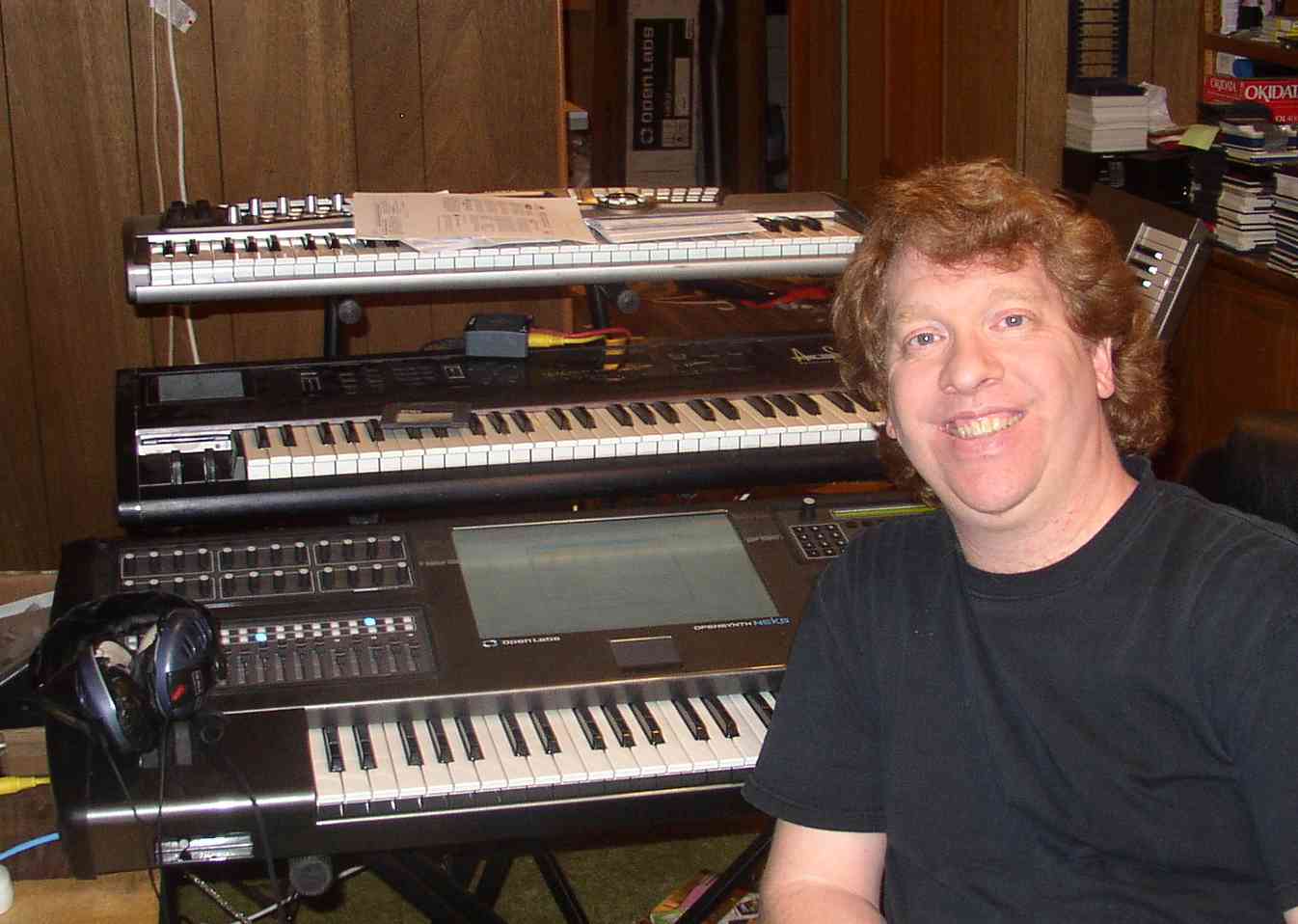
5-6 years ago, there was a NAMM Winter show in Anaheim when my developer friends saw this cool keyboard that had an actual computer inside it. We went downstairs and saw it - I was hooked. It was the OpenLabs keyboard, with a touch screen and a powerful PC computer inside. To me it was where hardware should be going - the convenience of a keyboard and integration of a real computer.
We get a lot of keyboards around here from the companies, but I don't really want them personally as much as I wanted the OpenLabs. I wanted to program my own live gig software for changing and manipulating sounds. Most hardware samplers don't stream and are limited in structure. SOftware sampelrs aren't. To me, the OpenLabs was (and is) the future.
The next winter NAMM, they were showing in the upper level, and went over and asked if we could bundle Translator in their units. I went to talk to one of the executives, and he recognized me and said "I sent you a pizza once!" I said "what?" and he explained to me his encounter with me 8 years previous.
I had gotten a call from customer how was trying to work some things out with his Ensoniq. I helped him, and he said "thanks so much - how about I send you a pizza for dinner?" he was in Texas - I knew that - so I said "how are you going to do that?" He said it'll be there, just don't make anything for dinner. Sure enough, Dominos shows up at 5pm and delivers a pepperoni pizza. Turns out my customer knew how to order pizza online and have it delivered anywhere, there was a startup online system Dominos had.
Turns out my customer was a high executive and software architect at OpenLabs - Craig Negoescu - and that eventually helped, along with our work, a contract with OpenLabs. We now fully support OpenLabs keyboards and a copy of Translator (a special edition) comes with every OpenLabs keyboard.
In fact, you can see our OpenLabs Neko in the picture in this article.
CSN: Translator is approaching 10 years. Is there life after Translator?
G: Yes! We've gathered our technologies around a bundle called SamplerTools. This will be a collection of three programs - Translator, Constructor, and SampleManage. Translator does the conversions, Constructor does the instrument building, and SampleManage does the database stuff. We have Kontakt Assistant, a assistant program for Kontakt instruments, on the way, and there are 3-4 secret projects that we are presently working on.
CSN: Constructor and SampleMange were announced a long time ago.
G: I know, and we feel real bad about that. The one thing we've learned beyond any shadow of doubt is that never again will we announce a product before we release it. That's been unfair for our customers, the public, and us. Mostly the delays have been that we are perfectionists and we want better products, not more products. Now that our announced products are ready for release, we can even out and do things right. It's our one regret.
CSN: Whats your highest level of satisfaction at Chicken Systems?
G: Answering emails and phone calls from customers, no doubt. I'm a people person by nature, and it's nice to help people with their musical issues and probelms. It's not just the famous people, it's everyone.
Dave Barry, the humorist and writer, said once that out fo the 6 billion on earth, only 1 million really know whats going on and the other 5.9 billion people are dependant on them to thell them whats going on. I believe that; it used to be you'd play a piano or blow on a horn for 70 years of your life and you were a successfull musician. Nowadays, it's so complex and specialized.
I like our position in helping people extend themselves to where they can produce great music without getting lost in the non-musical parts of it.
We thank Garth for taking time out of is busy schedule to talk to us.
|